STEM Map
To support you in identifying real-life opportunities to engage with STEM, we have created an interactive Google Map that brings together a selection of STEM-related places across the partner countries. Each location is presented as a pin to easily explore options in your area, aiming to encourage learning and curiosity around STEM beyond the home and school environments.
Women Who Inspire
Behind a great discovery, innovation, or invention, there is someone who was not afraid to ask questions, take risks, imagine new possibilities, and solve problems. Throughout history, women have significantly contributed to science, technology, engineering, and mathematics, often having to overcome significant barriers to be able to do so. This section celebrates some of these inspiring women, from historical figures to contemporary STEM leaders whose work has shaped the world we enjoy today.
“The future never just happened. It was created.” — Mae Jemison
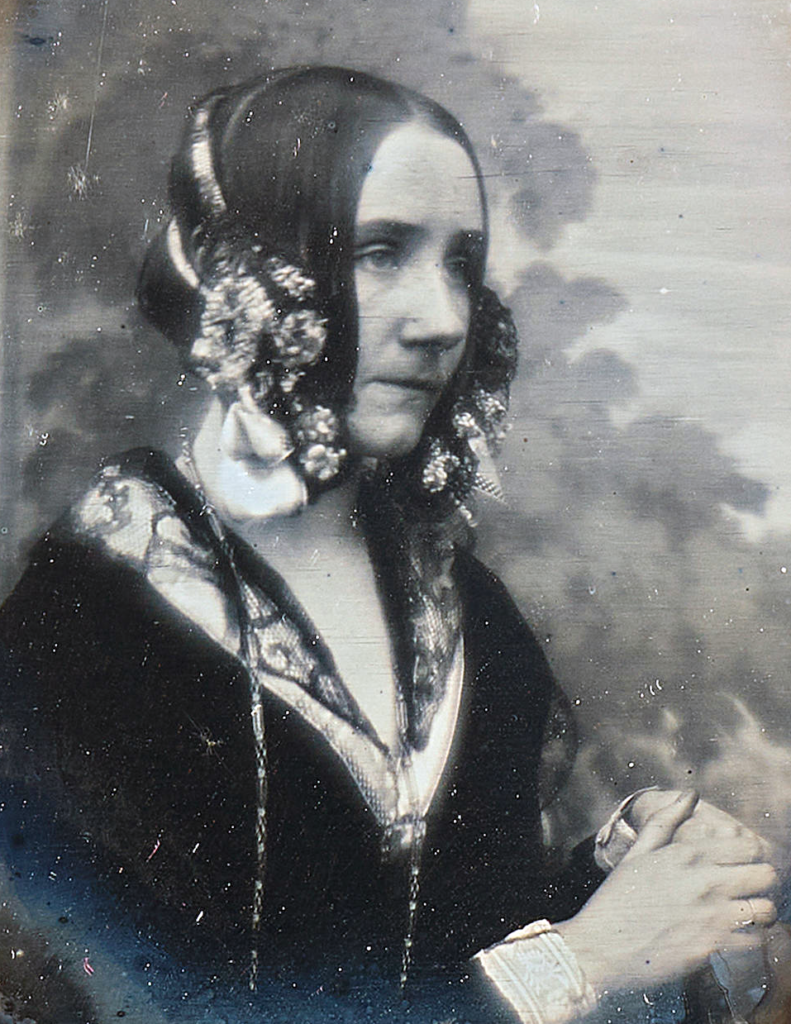
Photo: Antoine Claudet.
License: Public Domain.
Source ↗
💡 Let’s think!
What problem did she solve?
Which of her qualities do you admire most?
What would you ask her if you had the chance to meet her?
How is her work used today? Has it changed your everyday life?
Ada Lovelace
Computer Science & Mathematics
Why she’s inspiring:
Ada Lovelace is often recognised as the world’s first computer programmer. Long before modern computers existed, she imagined that machines could do much more than calculations, they could help solve problems and even create music and art. Her ideas were far ahead of her time.
Did you know? Ada wrote the first algorithm designed for a machine almost 100 years before electronic computers were invented.
How does her work affect our everyday lives?
Ada’s ideas laid the foundations for computer programming. Today, programming powers everything from smartphones and websites to video games and artificial intelligence.
License: Public Domain.
Source ↗
💡 Let’s think!
What problem did she solve?
Which of her qualities do you admire most?
What would you ask her if you had the chance to meet her?
How is her work used today? Has it changed your everyday life?
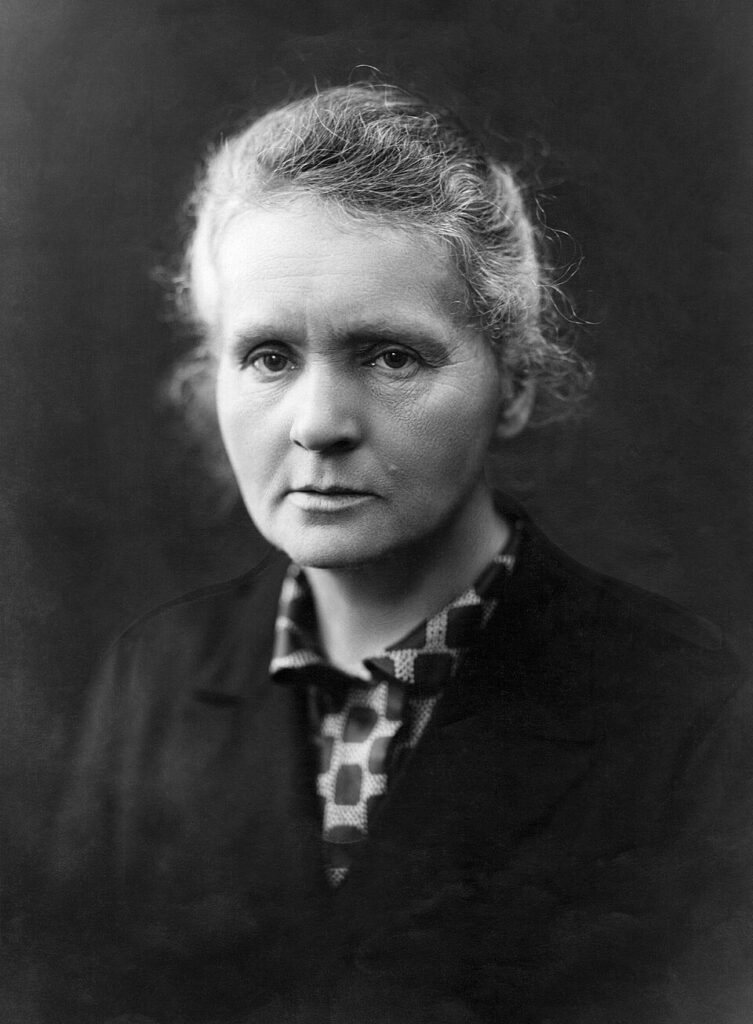
Marie Curie
Physics & Chemistry
Why she’s inspiring:
Marie Curie dedicated her life to scientific discovery and became the first woman to win a Nobel Prize. Her groundbreaking research on radioactivity transformed medicine and science, showing that determination and curiosity can change the world.
Did you know? Marie Curie is the only person to win Nobel Prizes in two different scientific fields: Physics and Chemistry.
How does her work affect our everyday lives?
Her discoveries helped develop medical imaging and cancer treatments that continue to save millions of lives around the world.
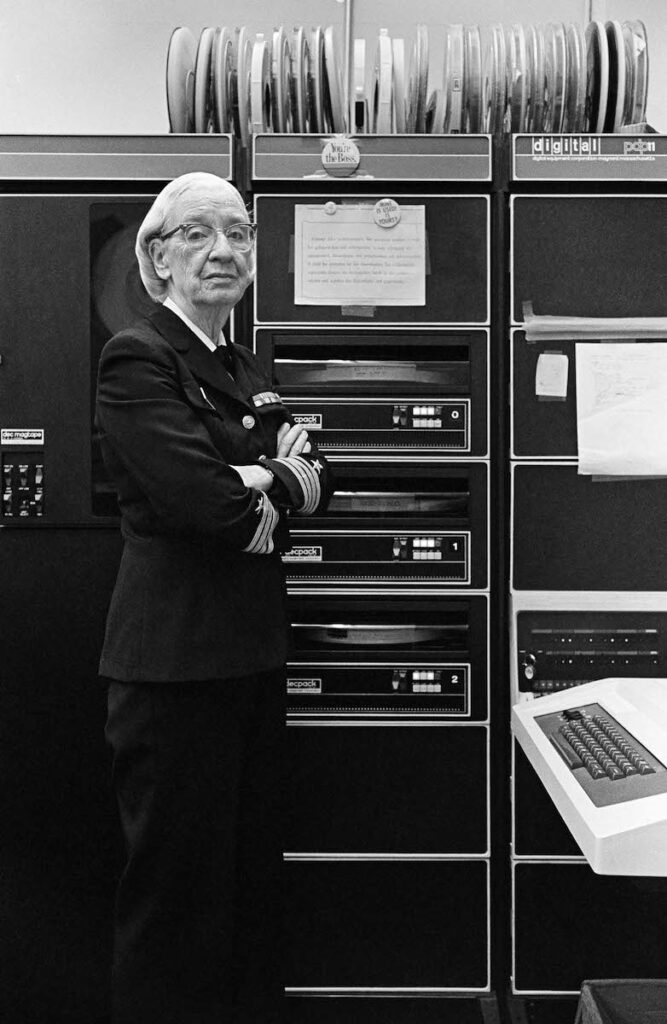
Photo: Lynn Gilbert.
License: CC BY-SA 4.0
Source ↗
💡 Let’s think!
What problem did she solve?
Which of her qualities do you admire most?
What would you ask her if you had the chance to meet her?
How is her work used today? Has it changed your everyday life?
Grace Hopper
Computer Science
Why she’s inspiring:
Grace Hopper believed computers should be easier for everyone to use. She helped create programming languages that allowed people to write computer instructions using words instead of complicated machine code.
Did you know? Grace Hopper popularised the term “computer bug” after a real moth was found inside a computer!
How does her work affect our everyday lives?
Her work helped make computer programming more accessible and influenced many of the programming languages still used today.

License: Public Domain (United States).
Source ↗
💡 Let’s think!
What problem did she solve?
Which of her qualities do you admire most?
What would you ask her if you had the chance to meet her?
How is her work used today? Has it changed your everyday life?
Hedy Lamarr
Communication Technology & Innovation
Why she’s inspiring:
Hedy Lamarr was an Austrian-American actress and inventor who combined creativity with scientific curiosity. Beyond her film career, she developed ideas in the field of wireless communication. She co-invented a system known as frequency hopping, designed to change radio frequencies in a synchronized pattern to improve the security and reliability of wireless signals. Although the invention was not immediately applied, it later influenced key technologies used in modern communication systems such as Wi-Fi, Bluetooth, and mobile networks. Today, she is recognised as a pioneer whose work helped shape wireless communication technology.
Did you know? She was also a successful Hollywood actress while working on ideas that would later influence modern wireless communication systems.
How does her work affect our everyday lives?
Her ideas contributed to technologies that allow wireless communication between devices, including Wi-Fi, Bluetooth, and mobile networks
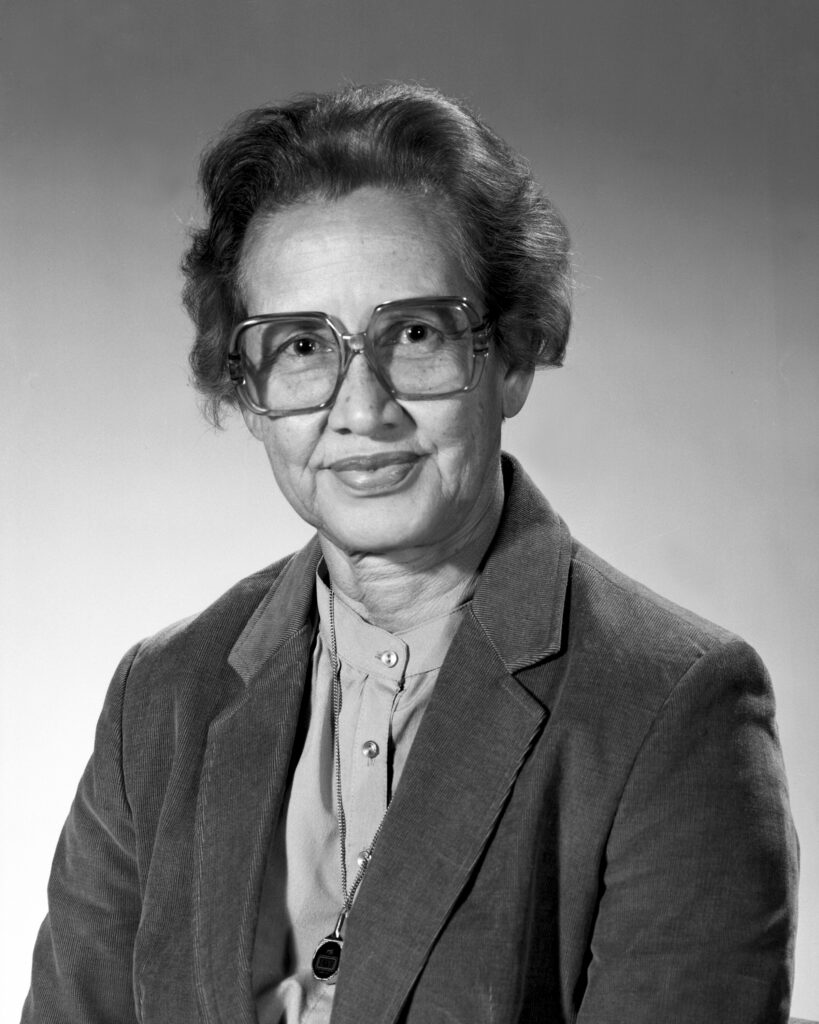
Photo: NASA.
License: Public Domain (U.S. Government Work).
Source ↗
💡 Let’s think!
What problem did she solve?
Which of her qualities do you admire most?
What would you ask her if you had the chance to meet her?
How is her work used today? Has it changed your everyday life?
Katherine Johnson
Mathematics & Space Science
Why she’s inspiring:
Katherine Johnson was a brilliant mathematician whose calculations helped make some of NASA’s most important space missions possible. She overcame racial and gender barriers to prove that talent, determination, and hard work can open doors to extraordinary achievements. Her story continues to inspire children to believe in the power of mathematics.
Did you know? Before astronauts trusted computers, they trusted Katherine Johnson. John Glenn, an American astronaut, personally asked her to check the computer’s calculations before his historic orbital spaceflight in 1962.
How does her work affect our everyday lives?
Her mathematical work helped make human space exploration safer and more accurate. Today, mathematics continues to play a vital role in space missions, satellite technology, GPS navigation, and many of the technologies we use every day.
License: Public Domain.
Source ↗
💡 Let’s think!
What problem did she solve?
Which of her qualities do you admire most?
What would you ask her if you had the chance to meet her?
How is her work used today? Has it changed your everyday life?
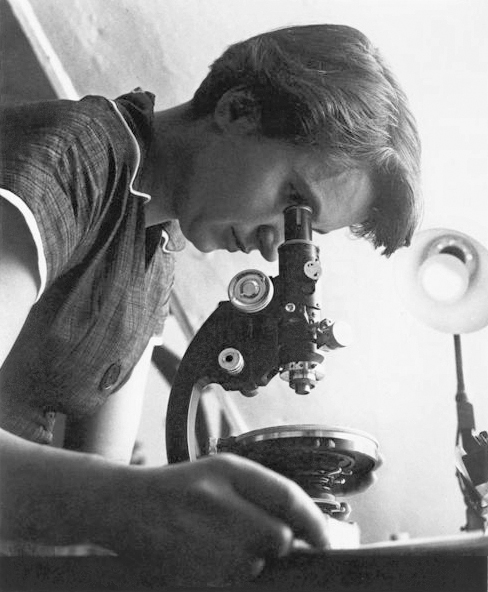
Rosalind Franklin
Chemistry & Molecular Biology
Why she’s inspiring:
Rosalind Franklin’s careful research helped scientists understand the structure of DNA, the molecule that carries our genetic information. Her work reminds us how important teamwork, precision, and perseverance are in science.
Did you know? One of Rosalind Franklin’s X-ray images, known as “Photo 51,” played a key role in revealing the double-helix structure of DNA.
How does her work affect our everyday lives?
Her research supports modern medicine, genetic testing, and scientific discoveries that improve healthcare.
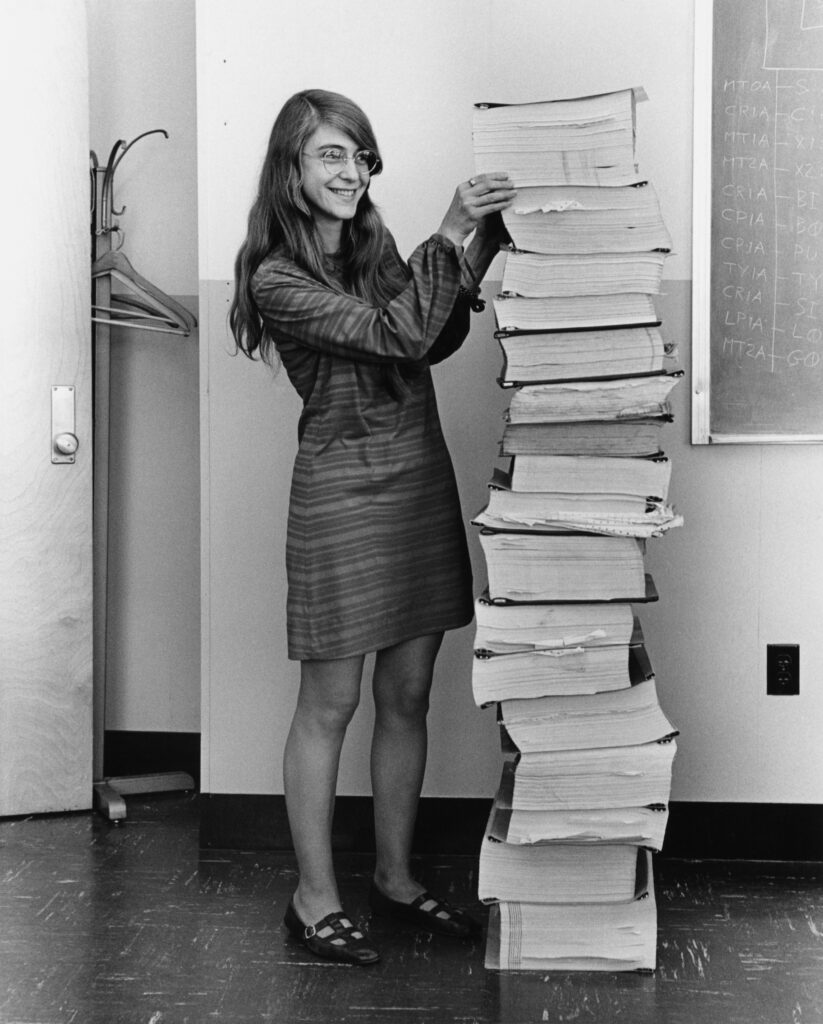
Photo: NASA (restored version on Wikimedia Commons).
License: CC BY-SA 4.0
Source ↗
💡 Let’s think!
What problem did she solve?
Which of her qualities do you admire most?
What would you ask her if you had the chance to meet her?
How is her work used today? Has it changed your everyday life?
Margaret Hamilton
Computer Science & Software Engineering
Why she’s inspiring:
Margaret Hamilton studied mathematics and philosophy at Earlham College in Indiana. She briefly taught high school mathematics and French upon graduation. She was one of the first computer software programmers and worked at the Massachusetts Institute of Technology (MIT), where she developed software to help predict the weather. At the time, computer science and software engineering were not fields of study you could pursue. Mathematicians and others learned how to program computers on the job through trial and error. Hamilton was naturally good at computer programming. She later joined the MIT lab that NASA hired to write the software for navigation and lunar landing guidance. Her software helped us land on the Moon.
Did you know? Margaret Hamilton coined the term “software engineer” to describe the important work she and her team were doing. At the time, many people didn’t see software as a real engineering discipline, but today software engineering is recognised as one of the world’s most important STEM careers.
How does her work affect our everyday lives?
Margaret Hamilton’s ideas about designing reliable software continue to influence the technology we use every day, from smartphones and computers to medical devices, aircraft, and space exploration systems.
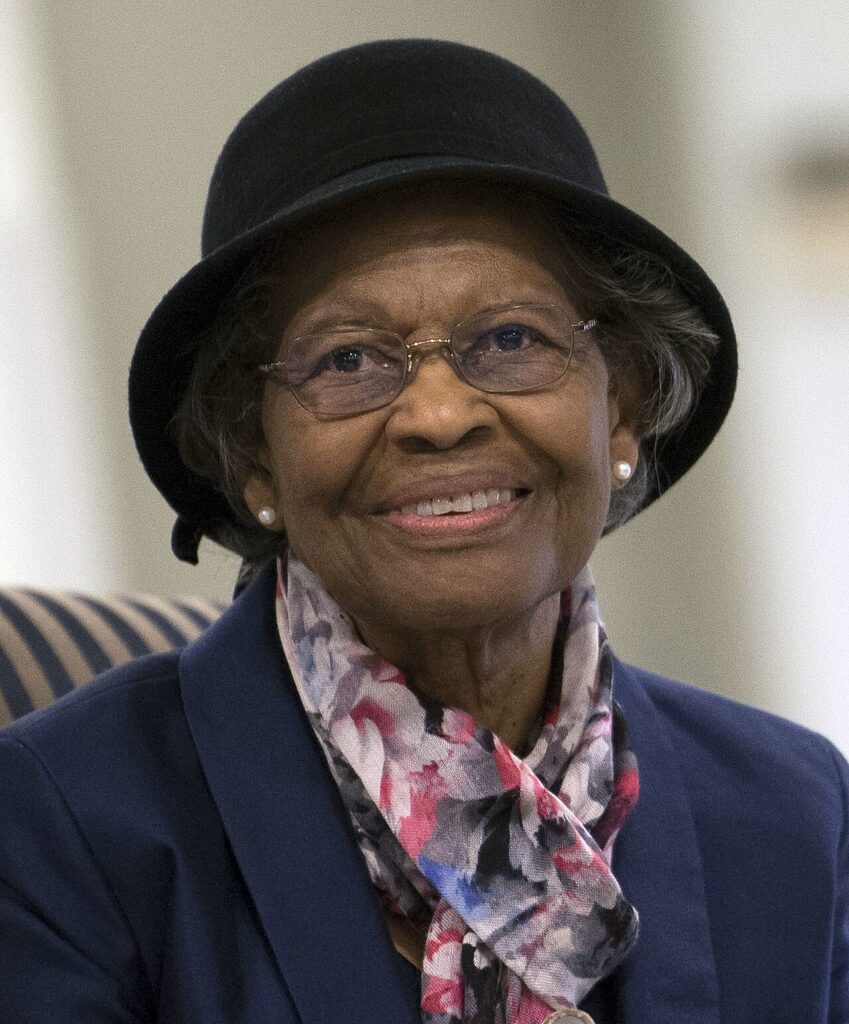
Photo: Adrian Cadiz, U.S. Air Force.
License: Public Domain (U.S. Government Work).
Source ↗
💡 Let’s think!
What problem did she solve?
Which of her qualities do you admire most?
What would you ask her if you had the chance to meet her?
How is her work used today? Has it changed your everyday life?
Gladys West
Mathematics, Computer Science & Geospatial Technology
Why she’s inspiring:
Born in 1930 in Virginia, United States, Gladys West is an African American mathematician who entered a field where both women and African Americans were significantly underrepresented. Despite this, she worked at the Naval Proving Ground in Dahlgren, contributing to advanced computational research. In the early 1960s, she took part in an award-winning study on the orbital motion of Pluto and Neptune, requiring billions of calculations on early mainframe computers. She later worked with NASA satellite data to develop precise models of the Earth’s shape, helping lay the foundations for modern GPS technology.
Did you know? Gladys West spent decades working with satellite data and mathematical models to create a detailed representation of the Earth. Her work became an essential foundation for accurate GPS systems.
How does her work affect our everyday lives?
Her research supports the GPS technology used every day for navigation, maps, transportation, logistics, and many other applications based on location data.
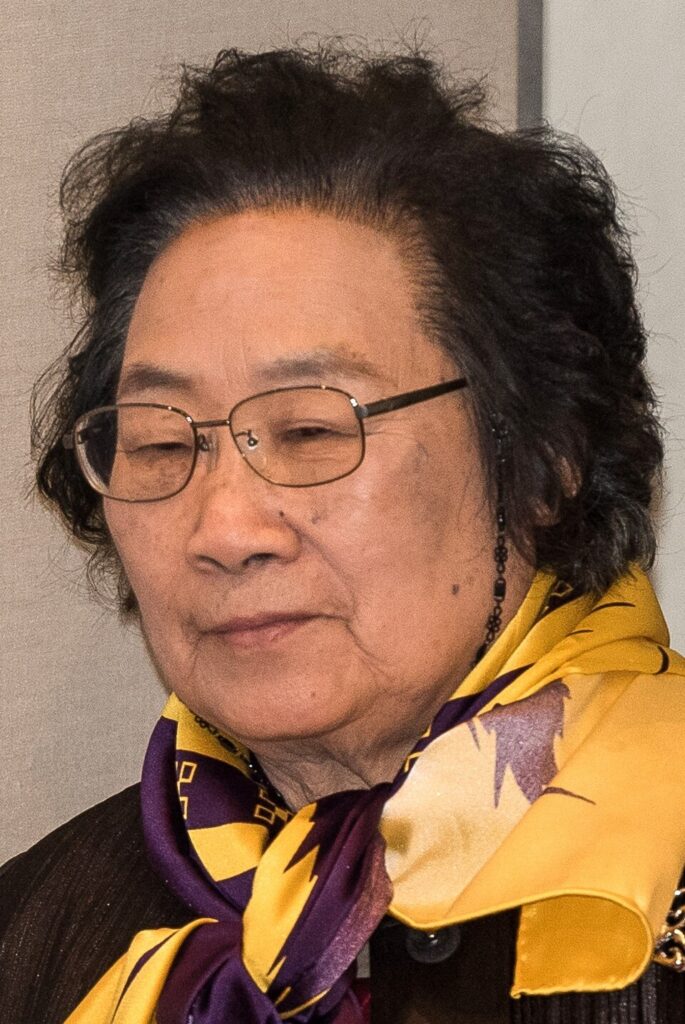
Photo: Christopher Michel.
License: CC BY 2.0
Source ↗
_(cropped).jpg)
💡 Let’s think!
What problem did she solve?
Which of her qualities do you admire most?
What would you ask her if you had the chance to meet her?
How is her work used today? Has it changed your everyday life?
Tu Youyou
Medicine & Chemistry
Why she’s inspiring:
Tu Youyou combined traditional knowledge with modern science to discover a medicine that has saved millions of lives from malaria. Her work shows that curiosity and innovation can solve global health challenges.
Did you know? Tu Youyou became the first Chinese woman to receive a Nobel Prize in Physiology or Medicine.
How does her work affect our everyday lives?
Her discovery of artemisinin remains one of the world’s most effective treatments for malaria.

Photo: Original photographer listed on Wikimedia Commons.
License: CC BY-SA 3.0
Source ↗
💡 Let’s think!
What problem did she solve?
Which of her qualities do you admire most?
What would you ask her if you had the chance to meet her?
How is her work used today? Has it changed your everyday life?
Radia Perlman
Computer Networking
Why she’s inspiring:
Radia Perlman developed technologies that make computer networks more reliable and efficient. She solved complex problems that helped the Internet grow into the global network we use today.
Did you know? Radia Perlman is often called the “Mother of the Internet,” even though she prefers to simply be known as an engineer.
How does her work affect our everyday lives?
Her inventions help information travel safely and efficiently across the Internet, making online communication possible.
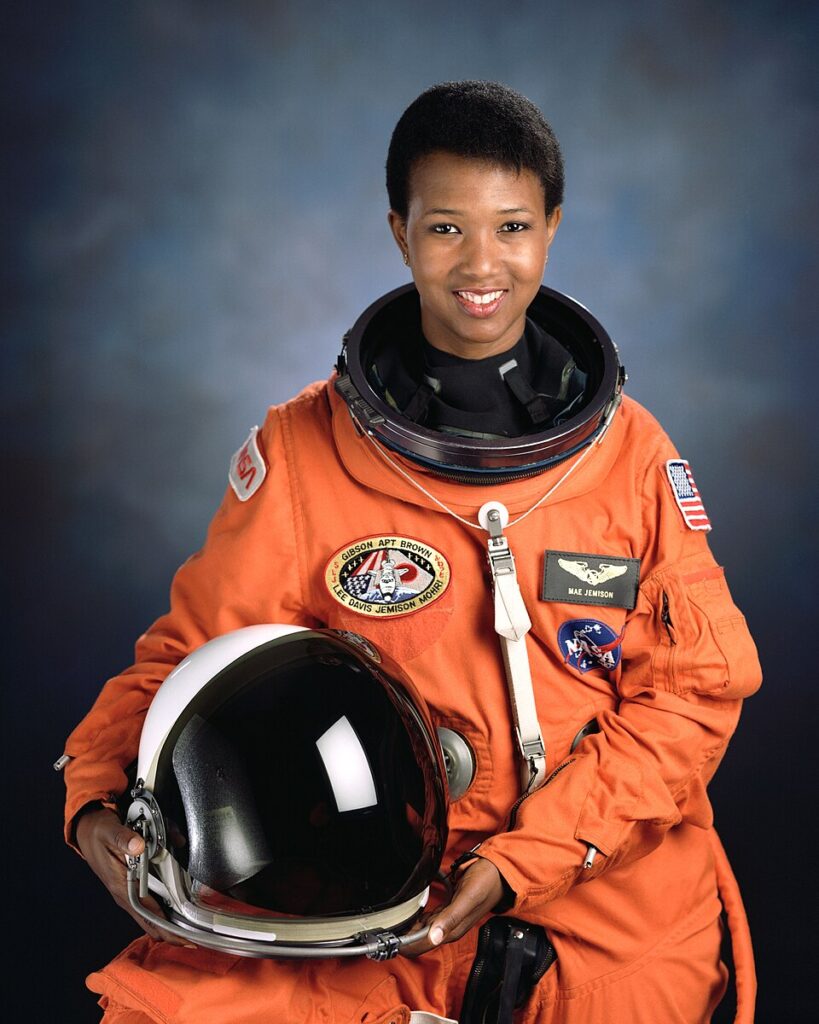
Photo: NASA.
License: Public Domain (U.S. Government Work).
Source ↗
💡 Let’s think!
What problem did she solve?
Which of her qualities do you admire most?
What would you ask her if you had the chance to meet her?
How is her work used today? Has it changed your everyday life?
Mae Jemison
Engineering, Medicine & Space
Why she’s inspiring:
Mae Jemison followed her passion for science, medicine, and space exploration to become the first African American woman to travel into space. She encourages young people to dream big and believe that science is for everyone.
Did you know? Mae Jemison was also a medical doctor before becoming a NASA astronaut.
How does her work affect our everyday lives?
Her achievements continue to inspire future scientists, engineers, doctors, and astronauts, helping break barriers and encourage diversity in STEM careers.
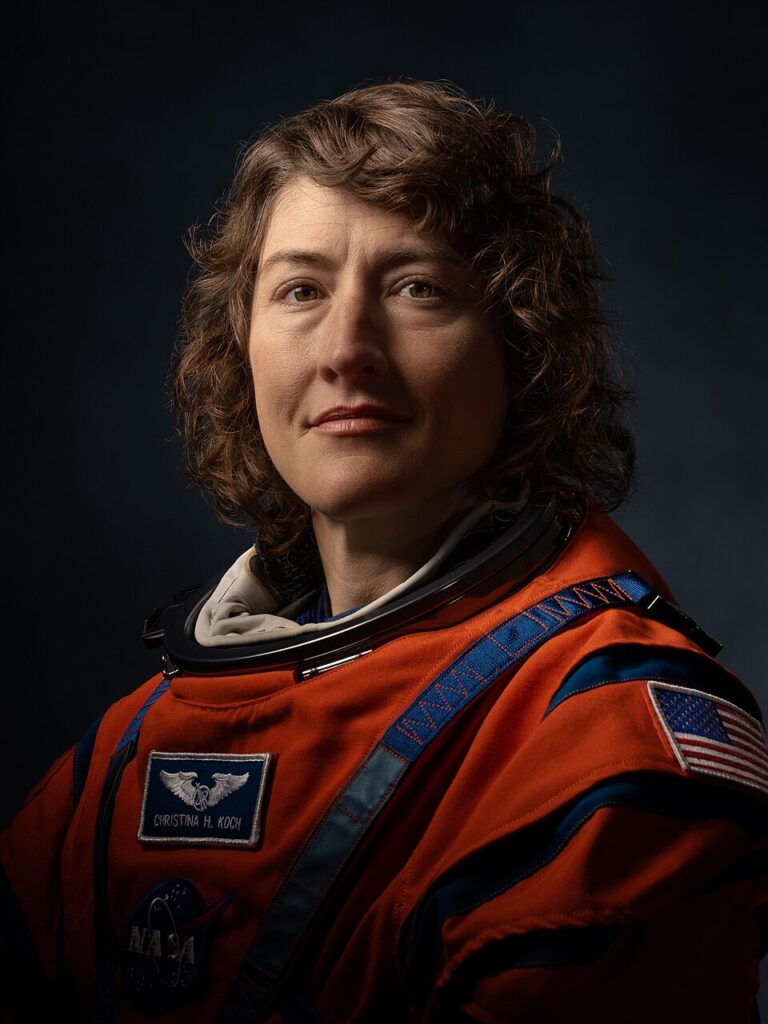
Photo: Josh Valcarcel, NASA
License: Public Domain (U.S. Government Work).
Source ↗
💡 Let’s think!
What problem did she solve?
Which of her qualities do you admire most?
What would you ask her if you had the chance to meet her?
How is her work used today? Has it changed your everyday life?
Christina Koch
Engineering & Space
Why she’s inspiring:
Christina Koch is an engineer and NASA astronaut who has helped expand our understanding of living and working in space. Through determination, teamwork, and a passion for exploration, she has shown that curiosity and perseverance can lead to extraordinary achievements. Her career inspires young people to dream big and explore careers in science and engineering.
Did you know? Christina Koch spent 328 consecutive days in space, setting the record for the longest single spaceflight by a woman at the time. She also took part in the first all-female spacewalk in 2019.
How does her work affect our everyday lives?
Research carried out on the International Space Station helps scientists develop new technologies and improve our understanding of health, materials, and life in extreme environments. Many innovations developed for space missions later find their way into everyday life on Earth.
License: Public Domain.
Source ↗
💡 Let’s think!
What problem did she solve?
Which of her qualities do you admire most?
What would you ask her if you had the chance to meet her?
How is her work used today? Has it changed your everyday life?
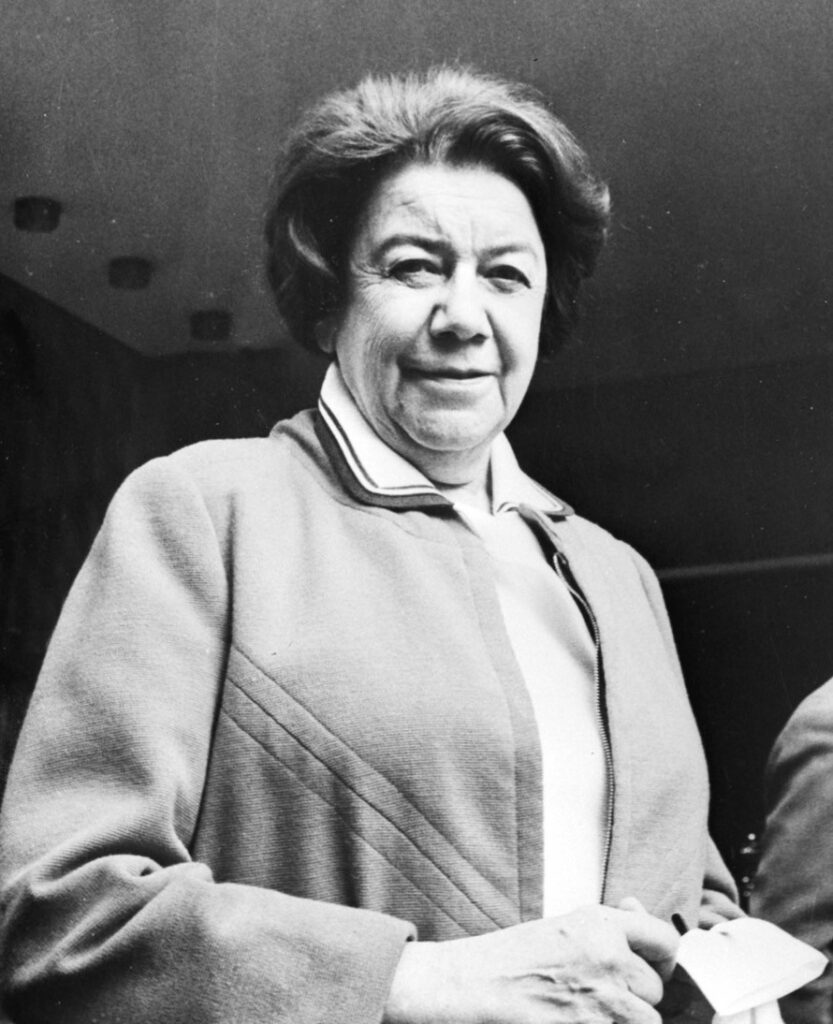
Ana Aslan
Medicine
Why she’s inspiring:
Ana Aslan demonstrates how science and medicine improve people’s health and wellbeing. Ana Aslan dedicated her life to helping people live healthier and better lives. At a time when few women pursued careers in science or medicine, she became an internationally respected researcher whose work transformed the study of ageing. Her curiosity, determination and passion for improving people’s wellbeing continue to inspire young scientists around the world.
Did you know? Ana Aslan founded one of the world’s first institutes dedicated to ageing research and developed the famous Gerovital H3 treatment. Her scientific achievements brought international recognition to Romania, and her institute welcomed patients from many countries, including well-known artists, athletes and public figures.
How does her work affect our everyday lives?
Today, doctors recognise healthy ageing as an important part of healthcare, focusing not only on treating diseases but also on preventing them and improving quality of life. Ana Aslan’s work helped establish geriatrics as an important medical field and encouraged research that continues to support healthier and more active lives for older adults.
License: Public Domain.
Source ↗
💡 Let’s think!
What problem did she solve?
Which of her qualities do you admire most?
What would you ask her if you had the chance to meet her?
How is her work used today? Has it changed your everyday life?
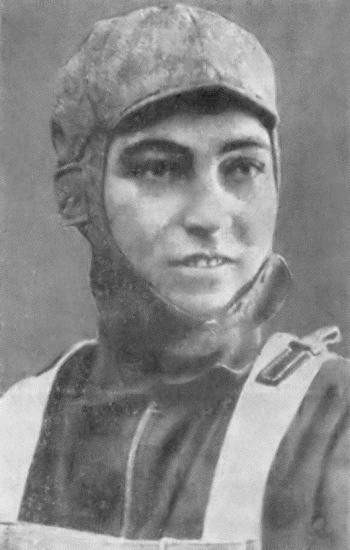
Smaranda Braescu
Aviation
Why she’s inspiring:
Smaranda Brăescu shows how technology, engineering and aviation advance exploration, innovation and human achievement. Smaranda Brăescu followed her dream of flying despite the barriers women faced in the early twentieth century. Through courage, determination and exceptional skill, she became one of the world’s leading parachutists and later a licensed pilot. Her story reminds us that perseverance and confidence can help us achieve goals that once seemed out of reach.
Did you know? In 1932, Smaranda Brăescu set the women’s world record for the highest parachute jump from more than 7,000 metres. She was also the first Romanian woman to earn an international parachuting licence and later flew long-distance missions, becoming one of Romania’s most celebrated aviation pioneers.
How does her work affect our everyday lives?
The achievements of early aviation pioneers like Smaranda Brăescu contributed to a better understanding of flight, parachuting and aviation safety. Their courage and discoveries inspired future generations of engineers, pilots and scientists whose innovations have made modern air travel safer, more efficient and accessible to millions of people around the world.